
On
My
Way
The OMW Method
OMW Equine was founded on a simple promise: to be On My Way, bringing professional, high-quality training directly to your farm whenever possible, eliminating boarding costs, and keeping you involved in every step of your horse’s progress.
Over years of hands-on experience, we discovered that OMW stood for far more than travel. It became a powerful way to understand the full training picture.
Today, the OMW Horsemanship Method™ is a clear, step-by-step framework that guides every horse and rider through meaningful, lasting progress. We give you the three pillars of correct and lasting horsemanship: Observe, Mindset and Work.
The beauty of OMW method lies in its cyclical nature: Observation informs Mindset, which enhances Work, and results feed back into better observations.
Observe
Mindset
Work
Observe
Seeing the Horse Clearly
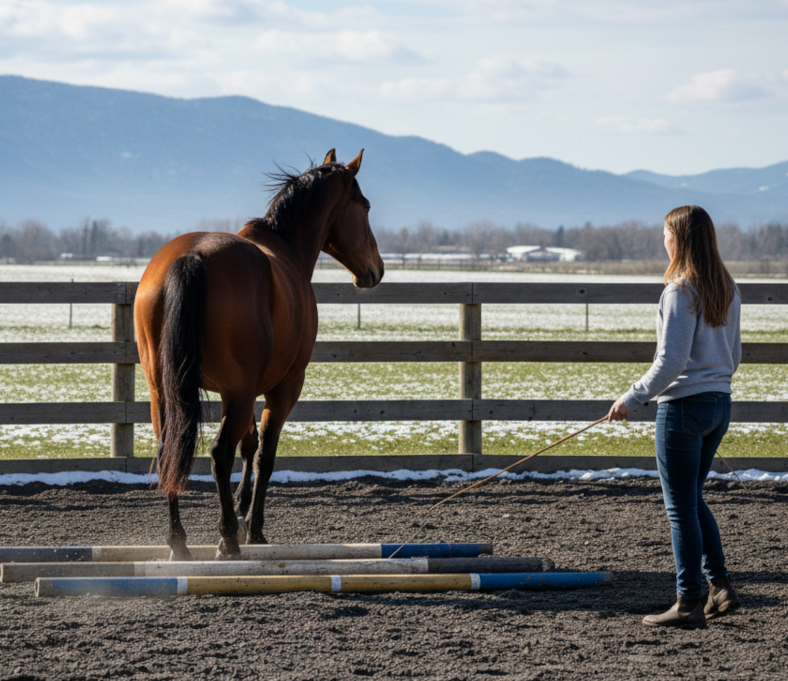
Observation is the foundation of the OMW Framework—it’s about tuning into the horse’s world without preconceptions. Horses are non-verbal communicators, so we must become fluent in their “language” to identify needs, stressors, or strengths early on. This step prevents misunderstandings that could lead to resistance, injury, or poor performance.
Key Elements to Observe
- Body Language: Subtle cues like ear position, tail swishing, lip licking, or eyes.
- Movement and Gait: Assess how the horse moves at liberty or under saddle. Look for asymmetry in strides, head carriage, and attention span.
- Behavior in Context: Note environmental factors. A horse that spooks at shadows in the arena might be reacting to past trauma, while one that's lethargic could be dulled from over desensitizing or boredom
Why It Matters
Misreading a horse can escalate problems. For instance, a “stubborn” horse might actually be in pain from ill-fitting tack. By observing first, you can tailor sessions to the horse’s current state, reducing frustration for both parties.
Observation encourages mindfulness, turning training into a dialogue rather than a monologue.

Why it matters
A horse with a strong mindset performs reliably under pressure, whether in competitions or on trails. Research in equine psychology shows that stressed horses have elevated cortisol levels, impairing memory and focus, leading to slower progress and higher injury risks.
When riders practice mindfulness, staying calm, present, and intentional, they create a clearer, more supportive environment that allows the horse to relax, learn faster, and perform with confidence.
Mindset
Shaping the Mind for Success
Once we’ve observed, we shift to mindset—the mental and emotional preparation that sets the stage for learning. Horses are prey animals with flight instincts, so building a positive mindset is crucial. We focus on creating confidence, trust, and willingness, transforming a reactive horse into a thoughtful partner.
Core Principles:
- Building Confidence: Through gradual exposure to new stimuli, horses learn that challenges are surmountable, reducing fear-based reactions.
- Fostering Trust: Consistency and fairness are key. Reward calm behavior with release of pressure, not just treats, to reinforce that humans are predictable and safe.
- Encouraging Willingness: A relaxed horse thinks better. Stress shuts down learning, so we prioritize mental breaks and positive reinforcement to keep the horse engaged.
- Mindfulness: Maintain awareness of your emotions and body presence so you communicate calm, clarity, and confidence to your horse.
By prioritizing mindset, we create horses that aren't just trained, but truly partnered, eager to learn and collaborate.
Work
Applying Purposeful Training
With observation and mindset in place, we move to work, the actionable phase where skills are built. Every exercise must have clear purpose, direction, consistent and measurable goals to ensure progress without overwhelming the horse. This is where theory meets practice, refining techniques for specific outcomes.
Essential Components:
- Purpose: Each drill ties back to a goal, like improving balance for better transitions or engaging the mind to strengthen communication.
- Direction: Provide clear cues and progression. Start simple and layer complexity as the horse masters each step.
- Consistency: When your horse knows what to expect, they can relax, trust the process, and show up willing every day.
- Measurable Goals: Training success is measured with visible, repeatable improvements you can see, feel, and maintain.

Why It Matters
Purposeful work turns understanding into real results. When every exercise is tied to a clear goal and taught through simple, progressive steps, the horse can learn with confidence instead of confusion. Doing this consistently builds trust and reliability creating training that is clear, fair, and lasting for both horse and rider.